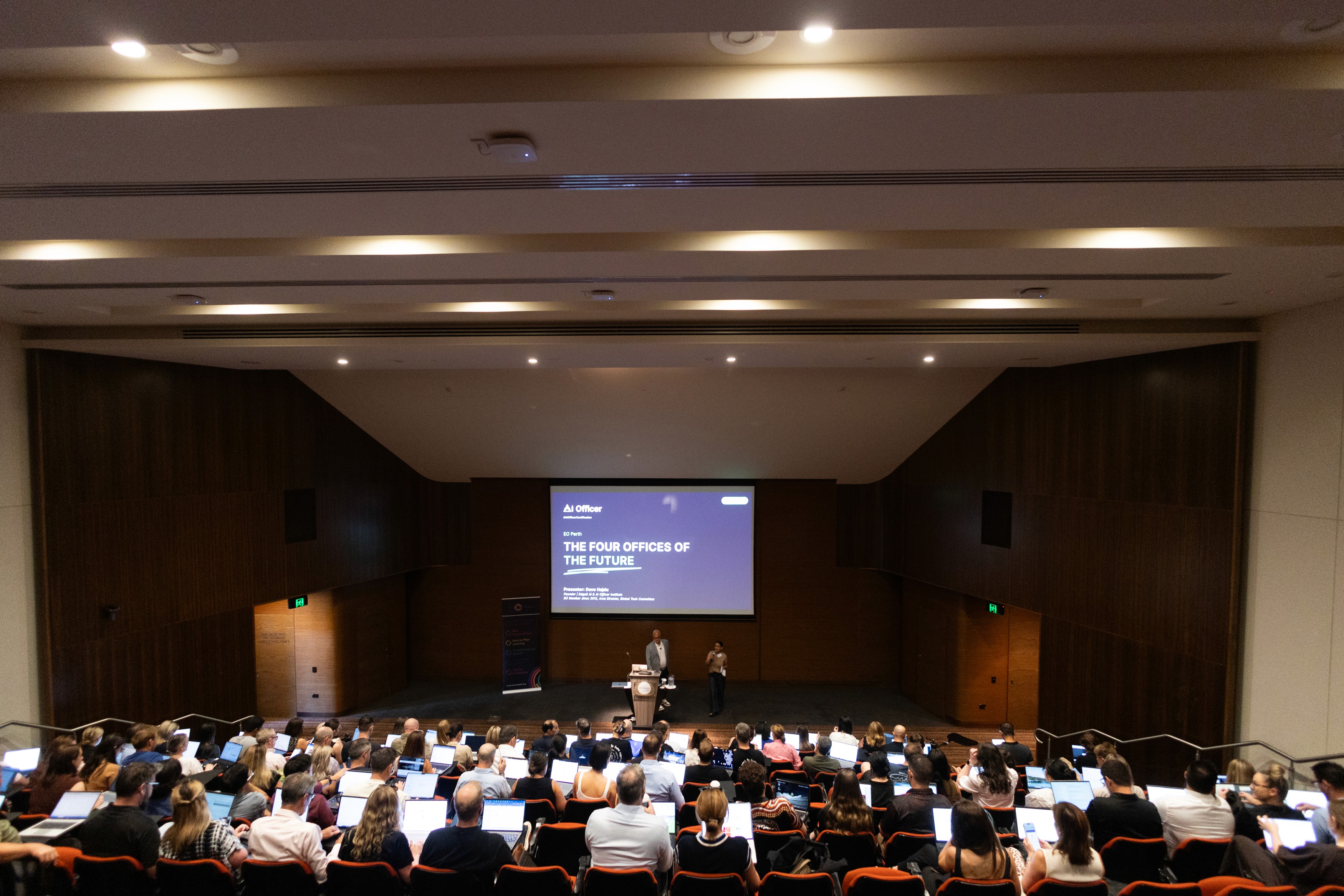
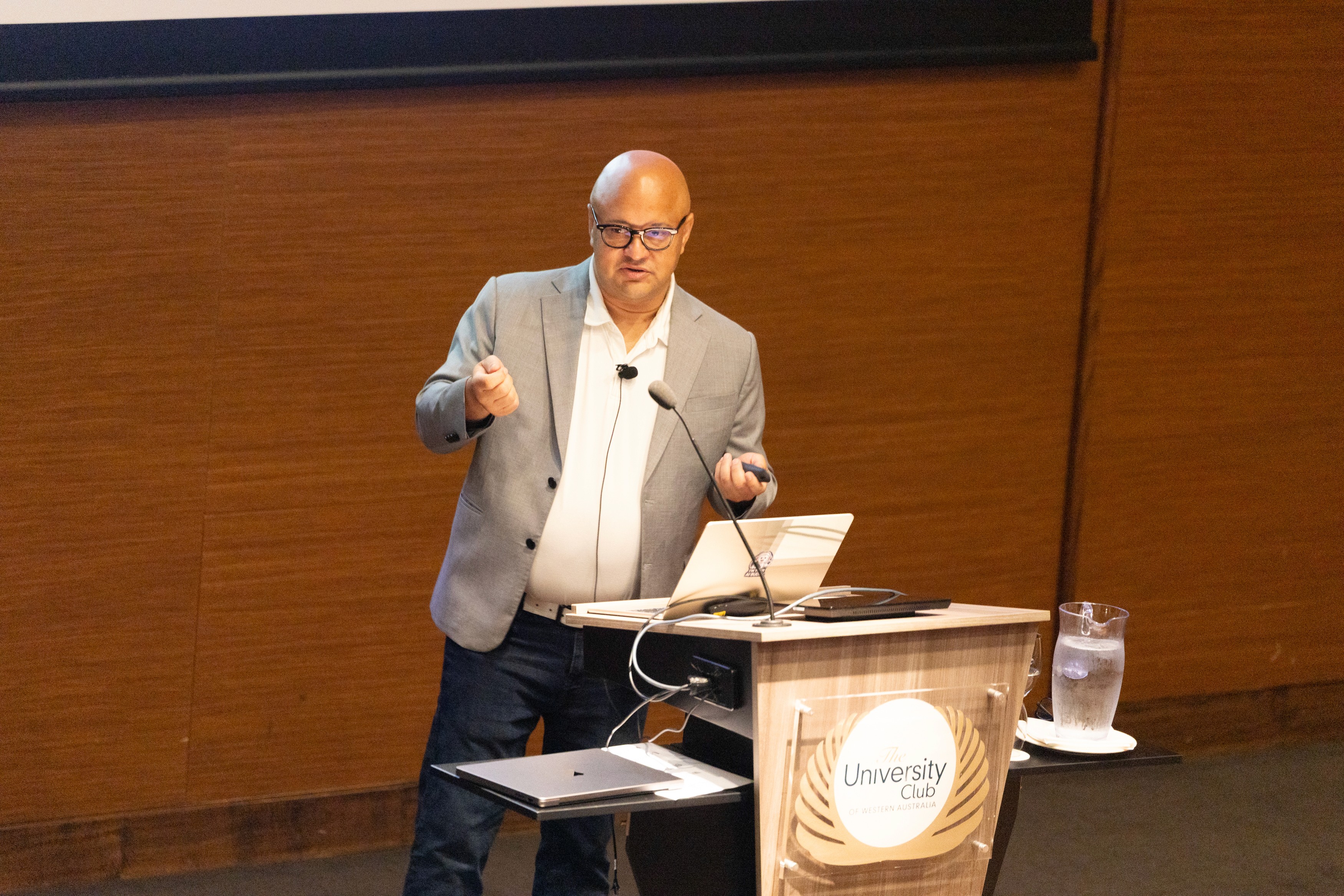
95% of companies see no ROI from AI. Not because the technology doesn't work. Because organizations can't connect it to outcomes.
I know this because I keep testing it. Last week, 102 founders in Australia. Same exercise I've run with over 500 founders across multiple countries. I ask them: where should AI be making you money or saving you money right now? They always have answers. Then I ask why it isn't. And every time, the same three things come up. The data is scattered. The workflows aren't documented. Nobody owns it.
Every company. Same three answers. These aren't technology problems. They're leadership problems.
The Job Changed and We Didn't
Chamath Palihapitiya made this point recently on the All In podcast. His company is at the forefront of AI, investing millions, and they're still not seeing doubled or tripled revenue. Meanwhile, Jack Dorsey just laid off 40% of Block. 70% of those were engineers. The company is profitable.
The companies getting ROI aren't the ones spending the most on AI. They're the ones who restructured how they think about their business. Leadership used to be 100% about people. Now it's 50% people and 50% artificial intelligence. And most of us have only been practicing one half.
The second half requires a completely different skill set. Organizing data. Documenting workflows. Cataloguing every process and decision point in your business. Without people trained to lead this work, the tools just sit there.
Every Outcome Falls Into Four Buckets
Every outcome your business cares about maps to one of four offices.
Revenue is everything related to your customer that drives new sales and retention. But it only works when someone owns the whole pipeline. Not just marketing. Not just sales. The whole thing. When it's siloed, AI optimizes pieces that don't connect.
Talent is the full lifecycle of your people. Hiring, onboarding, development, culture. But it only works when you treat your people processes as a product, not a process. The most important asset you have is your people processes, not your people. People fill them. AI accelerates them. But only if they exist.
Operations is everything that keeps the business running. But it only works when you redesign workflows, not patch them. If you automate chaos, you get faster chaos.
Innovation is the lens on the future of your business. But it only works when you give teams space to think and tools to build. Innovation doesn't die from lack of ideas. It dies from lack of bandwidth.
This isn't a new org chart. It's a diagnostic. A way to look at your business and ask: where should AI be creating value, and why isn't it?
What Founders Actually Prioritize
When the Australian room picked their most important office, the split was revealing. 50% chose Revenue. 30% chose Operations. 15% chose Innovation. 5% chose Talent.
Revenue makes sense. That's where founders feel the most pressure. Operations is where the waste is most visible, the processes nobody documented that eat time and money every day.
But Talent at 5% is the real insight. It's the office everyone underestimates. One founder discovered during the exercise that their entire onboarding process lived in one person's head. If that person left, the process left with them. Another realized the same person "owned" AI across all four offices, which meant nobody really owned anything.
The companies that figure out Talent first will have a structural advantage over everyone else. Because the constraint isn't the technology. It's having people who know how to lead AI programs and engineers who can build them. That's the hire most founders haven't made yet.
The Documentation Is the Build Spec
Here's what most people miss about getting from idea to prototype. The hard work isn't the coding. It's the documentation.
Every workflow follows the same pattern: Trigger, Data, Classify, Route, Respond, Action, Log. Basic workflows are pre-determined and exact, which is powerful until you need flexibility. A smart workflow adds a decision layer where AI classifies inputs, routes them down different paths, and responds appropriately. That's where guardrails matter, because AI is making choices, and choices come with risk.
In Australia, the founders documented one workflow each using this pattern. Then they paired up and pressure-tested each other's work with one question: could a new hire follow this? Because if a new hire can follow it, AI can follow it.
Then something interesting happened. The documented workflow became the prompt. They pasted it into an AI tool and vibe coded interactive prototypes in under an hour. Proposal generators. Onboarding tools. Customer feedback routers. All built from workflows that didn't exist that morning.
The documentation wasn't prep work for the build. The documentation was the build spec. That's the insight most companies miss when they jump straight to buying tools.
The Path to ROI
The gap between the 95% and the 5% isn't tools, talent, or budget. It's the organizational work underneath. The cataloguing. The documenting. The designing of workflows before anyone writes a line of code.
That work requires two things most companies don't have yet: people trained to lead AI programs who understand both the business and the technology, and engineers who can turn documented workflows into production systems. The founders who invest in those roles now will have a compounding advantage. The ones who wait will keep spending on AI tools that sit unused.
The path to ROI was never the technology. It was always the leadership's ability to connect AI to the outcomes that matter.