I spent years as a deep work disciple. Now, I open 4 Claude terminals at once and multi-delegate.
It was 5:15 this morning. I had a session 7 workbook to build for my leadership program, Georgetown launch prep for June, a blog series for my father to interview and draft, and a week of team conversations to line up. The old me would have picked one, put my phone in a drawer, and gone deep for four hours.
The new me planned each one for fifteen minutes and let them run in parallel. By 8:00 a.m. I was almost done. And I realized I hadn't planned enough.

I've been waiting on AI. That's backwards
If you're using AI agents the way most people do, you kick off a task and watch the output scroll by. You feel busy. You are not busy. You are waiting.
The skill that used to matter was focus. The skill that matters now is the opposite, and the same. The question every AI-ready leader is learning to answer is how to delegate to AI without becoming its babysitter.
Deep work isn't dead. The shape changed
Cal Newport's deep work was four hours of closed-door focus producing one clean output. That shape was built for a world where the bottleneck was your hands on the keyboard. That world is gone. The bottleneck now is your thinking, and agents are waiting for it.
What replaces the old shape is a two-part operating system.
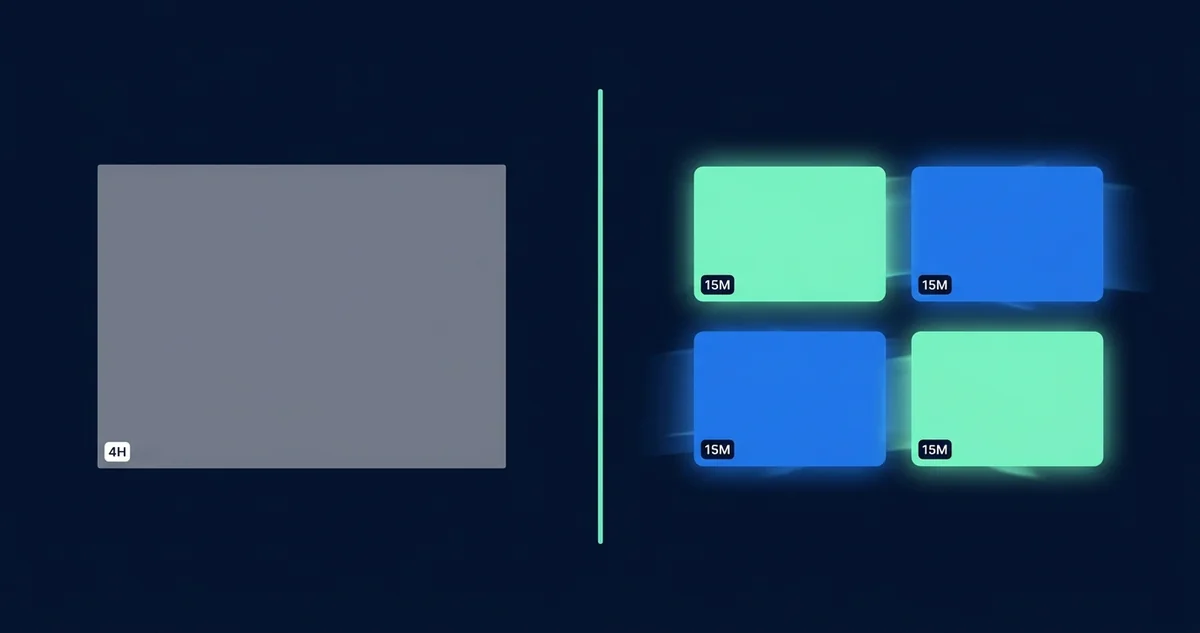
Compressed deep work is thirty to sixty minutes of the sharpest thinking you'll do all day. What matters, in what order, for whom, and with what constraints. You are not writing the thing. You are writing the plan that four agents will execute on your behalf.
Multi-delegation is what happens after. Agents running in parallel. You switching between reviews, checkpoints, permissions, and the inevitable agent that misunderstood what you asked. It feels like multitasking because it is. It is also the thing you were told never to do.
Compressed deep work, then multi-delegation. One loop. Run it twice before lunch and you've out-produced your old full-day self.
What compressed deep work actually looks like

For me, it's my Notion journal and one question: what are the top 4 outcomes I want to accomplish that would usually have taken me four days?
This is the leadership muscle almost no one has trained. It is the expensive part. Everything downstream of it is cheap. The skill of how to delegate to AI at scale sits downstream of this planning work.
The punchline: I find I need another compressed deep work session after lunch, because by then I'm already done with the morning's work.
The gap is exponential, not linear
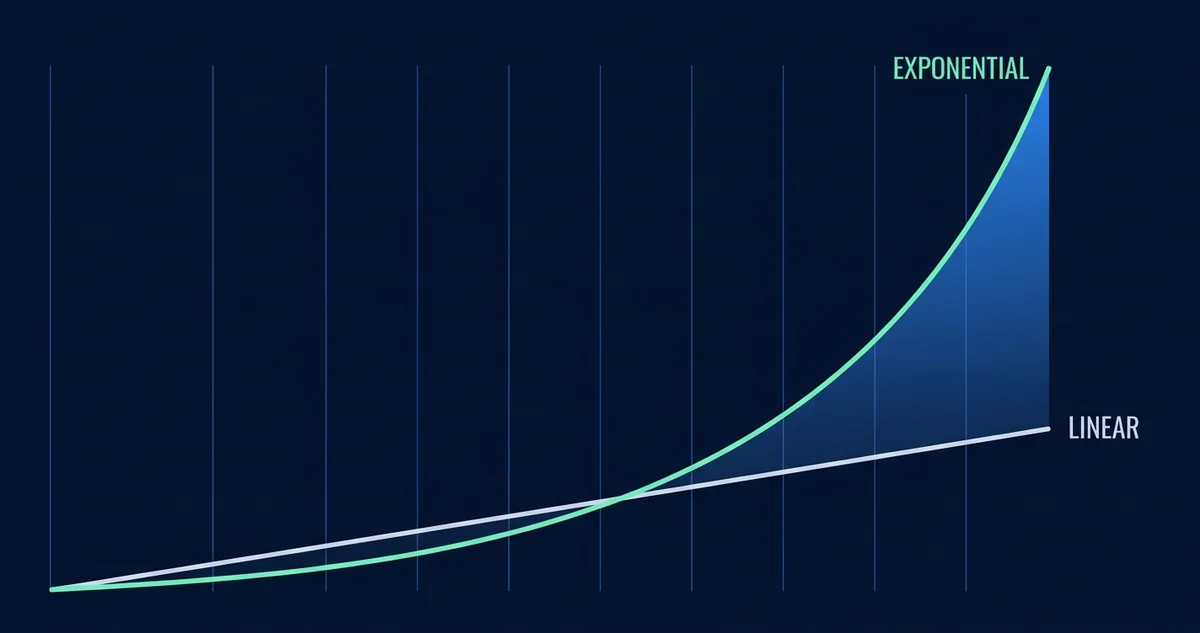
Your peer is running this loop. You're still defending your four-hour focus block. They ship four decisions before you finish one. That gap compounds every week.
What to do Monday morning
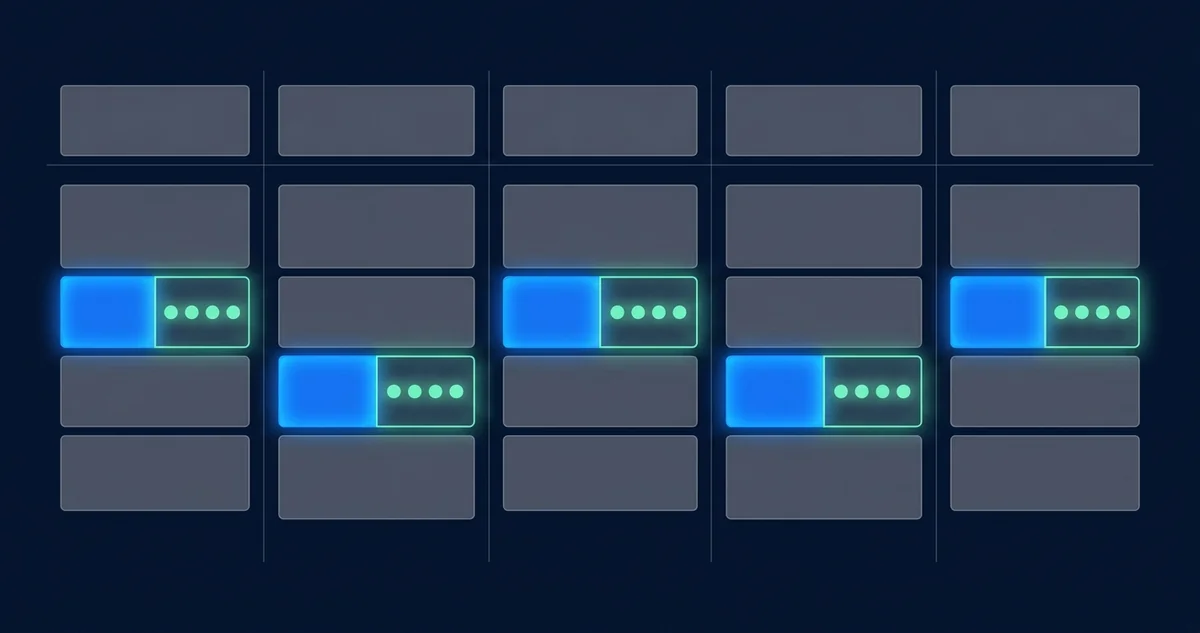
Open your calendar. Look at the next five days. Every block you've marked "focus time," ask one question: does this actually need a four-hour solo sprint, or should it be a forty-five-minute planning sprint followed by multi-delegation?
In my experience, most blocks are the second. You've been protecting the wrong thing.
Then ask the harder question. When the agents are running, what are you doing? If the answer is "watching them," you haven't planned enough for the next loop. Go plan the next loop.
The short answer to how to delegate to AI is this: plan upstream well enough that the agents do not need you mid-run.
This is not a productivity hack. This is the operating shift every AI-ready leader is quietly making, and most of your peers haven't figured out yet.
Come learn it with us

We're running two-day retreats for leaders who want to install this operating system. Small cohorts, hands-on, no theatre.
- Saigon, Vietnam: June 19
- Washington, D.C.: July, dates announcing soon
- Seattle: July, dates announcing soon
- More U.S. cities: rolling through July
Deep Work Is Dead. Long Live Multi-Delegation
If you're a founder or executive carrying an AI mandate, and your calendar still looks like 2022, this is the shift. Come spend two days with me and a room of people doing the same work.
Ready to install the loop? Reserve your spot at the next AI Officer retreat and learn how to delegate to AI at the pace your business actually needs. Or enroll in the AI Officer Certification to train the operator skill across your team.
Frequently Asked Questions
How do I delegate to AI effectively as a leader?
Run a two-part loop. First, compressed deep work: 30 to 60 minutes of sharp planning where you decide what matters, in what order, for whom, and with what constraints. Second, multi-delegation: three to four AI agents running your plan in parallel while you handle reviews and checkpoints. The quality of your delegation depends almost entirely on the upstream planning.
What is multi-delegation?
Multi-delegation is a work pattern where a leader runs multiple AI agents in parallel on pre-planned tasks, while managing reviews, checkpoints, permissions, and decisions. It replaces single-task deep work as the default operating mode for AI-enabled executives. Coined by Dave Hajdu, founder of AI Officer Institute.
What is compressed deep work?
Compressed deep work is a 30 to 60 minute planning sprint that concentrates the sharpest thinking of the day into a plan an AI agent can execute without needing clarification. It is the upstream input to multi-delegation.
Is deep work still relevant in the age of AI?
Yes, but its shape has changed. Deep work has compressed from four-hour solo focus blocks into 30 to 60 minute planning sprints that set up parallel AI execution. The thinking matters more than ever. The duration has shrunk.
How many AI agents should a leader run in parallel?
Most leaders start with three to four. The constraint is not the tooling. It is your ability to plan each one upstream well enough that they do not interrupt you mid-run with clarification questions.