The Perth pilot returned a 77 NPS. That is the number we keep returning to, because it was earned under conditions most programs never impose. This was not a room of leaders rating a comfortable experience. It was an AI leadership certification that asked senior people to build, and then held them to it. You pass by producing work, not by showing up. That single rule changes what a learner experiences from the first hour to the last.
So when we look back at what learners loved and where they struggled, we are not collecting satisfaction scores for their own sake. We are testing whether a challenge-based standard holds up under the weight of leaders who have seen every kind of workshop before. The 77 NPS is a signal. The story underneath it is more useful to any leader or sponsor deciding whether this credential is worth their time.
- The Problem. Most leadership programs certify attendance. Senior leaders have sat through enough theory to be skeptical of a badge earned by showing up.
- The Insight. The Perth pilot returned a 77 NPS while holding participants to a challenge-based standard: three working AI deliverables, a credential that can be failed. High satisfaction under real demand is the evidence the model is sound.
- The Way Forward. Leaders: expect to be tested and expect the test to be worth it. Sponsors: read the struggle as the feature, because you are buying proof, not seat time.
What learners loved: the work was real
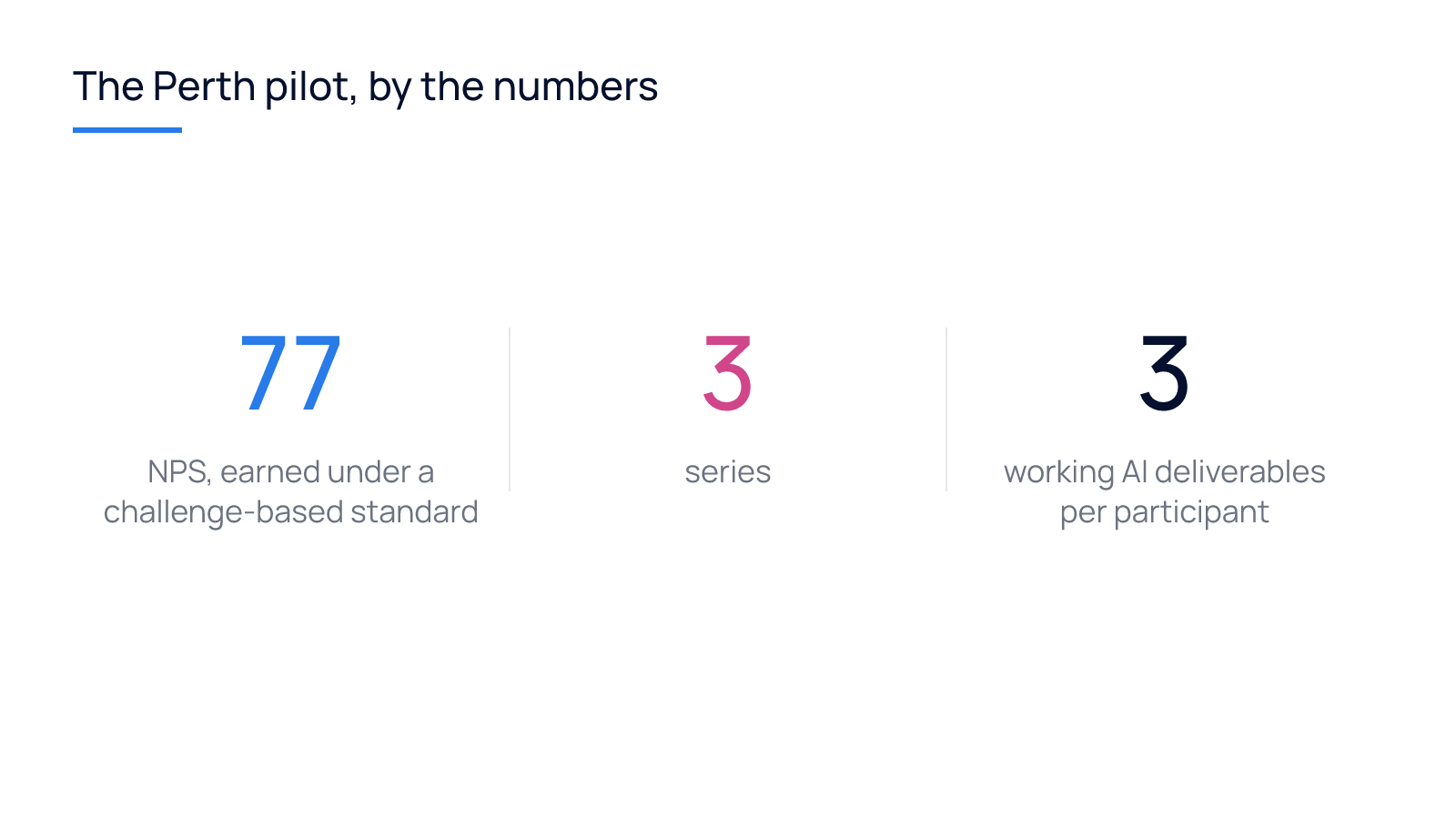
The most consistent theme was relief. Relief that the program did not ask participants to absorb slides and self-assess their way to a badge. It asked them to build. Across the three series, each participant produces three working AI deliverables. Not concepts. Not decks about what they might do someday. Working outputs they can carry back into their organizations.
That design earns trust from an audience that is naturally skeptical. Senior leaders have sat through enough theory. What they responded to was a standard that treated them as capable of producing, and then held them to it. The credential means something precisely because it can be failed.
Learners also valued the faculty. The program was built with Dr. Brooks Holtom, a faculty member at Georgetown{target="_blank" rel="noopener"}, and David Nilssen. That grounding gave the material an intellectual spine. It read as rigorous rather than reactive, which matters when the subject is a technology that changes monthly.
Where an AI leadership certification gets uncomfortable
Proof is harder than attendance. That is the point, and it is also where the friction lives. The struggles participants reported were not complaints about the program failing them. They were the productive discomfort of being held to a real bar.
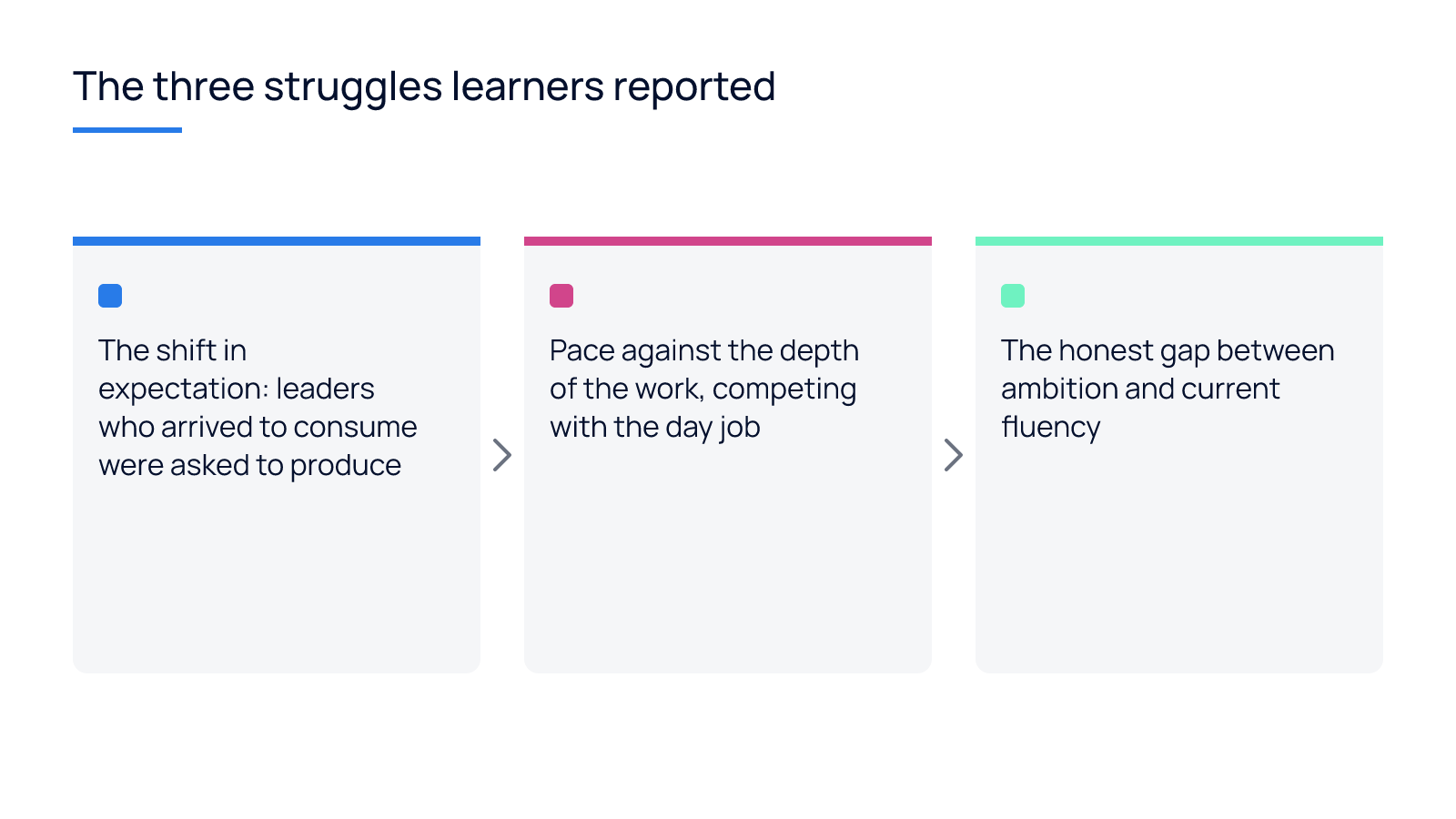
The first struggle was the shift in expectation. Leaders who arrived expecting to consume were asked to produce. For some, that reframing took time. The early hours of any challenge-based program carry a particular tension: the realization that you cannot coast, that the deliverable is yours to build and yours to defend.
The second struggle was pace against the depth of the work. Building three functioning deliverables inside a structured program demands focus that competes with the day job. Sponsors should hear this plainly. This is not a credential you earn in the margins of a busy week. It asks for real attention, and it returns real capability in exchange.
The third was the honest gap between ambition and current fluency. Some participants discovered the distance between talking about AI and actually shaping it into something that works. That gap is uncomfortable to meet. It is also the entire reason the certification exists. Closing it is the outcome.
Why the struggle is the proof
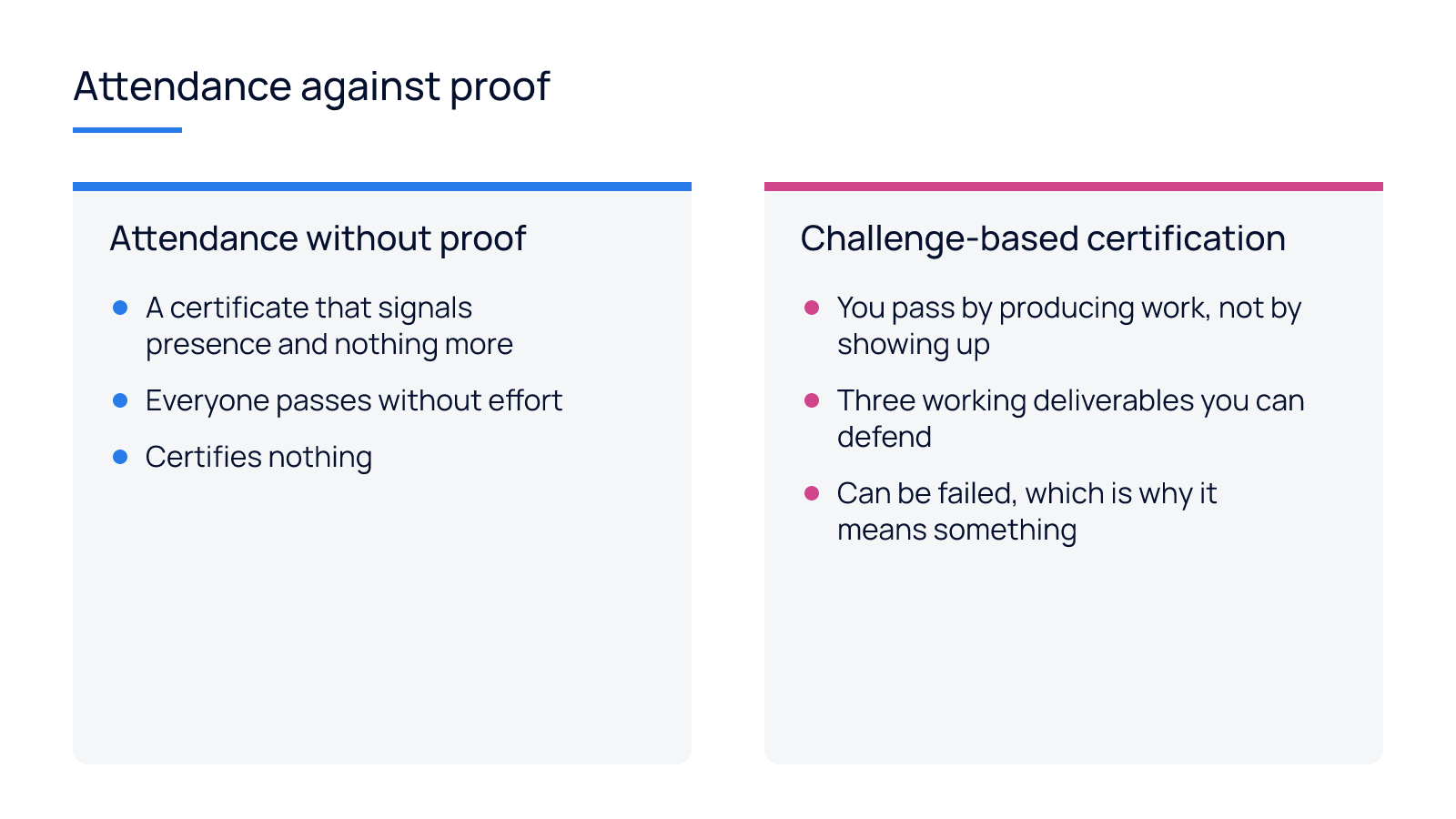
Here is the distinction that should guide any sponsor. A program with no struggle produces no evidence. If everyone passes without effort, the credential certifies nothing. The friction learners reported is the mechanism working as designed. The villain was never certification. The villain is attendance without proof, the certificate that signals presence and nothing more.
A 77 NPS from a pilot that asked participants to produce, not merely attend, is the number worth weighing. High satisfaction usually comes from low demand. This is the opposite. Learners rated the program highly while being held to a standard that made them work. That combination is rare, and it is the strongest evidence we have that the model is sound.
What this means for sponsors and leaders
If you are a leader deciding whether to pursue the credential, expect to be tested and expect the test to be worth it. You will leave with three deliverables that demonstrate capability to anyone who asks.
If you are an organization sponsoring leaders, read the struggles as a feature. You are not buying seat time. You are buying proof that the people you developed can lead in the AI era, evidenced by work they built under a real standard. The program runs in Vietnam, Dubai, and Washington, DC.
The lesson from what learners loved and where they struggled is the same lesson. A credential is only as valuable as what it refuses to give away for free.
If you want a credential that proves capability rather than attendance, explore the Leadership in the AI Era program and how you earn it.